Shower installation is one of the most valuable bathroom upgrades you can make. A well-designed shower can improve daily comfort, increase home value, and make a small bathroom feel more functional and modern. Whether you are replacing an old tub-shower combo or starting fresh with a custom design, the key to a successful project is careful planning, quality materials, and proper installation.
Why Shower Installation Matters
A shower is used every day, so it needs to be both durable and comfortable. Poor installation can lead to leaks, mold growth, water damage, and expensive repairs later on. On the other hand, a professionally installed shower offers better performance, easier cleaning, and a polished look that enhances the entire bathroom.
Many homeowners also choose to install a new shower to improve accessibility. Features like low-threshold entries, grab bars, and built-in seating can make bathing safer and more convenient for people of all ages.
Types of Shower Installations
Prefabricated Shower Kits
Prefabricated shower kits are a popular option because they are often more affordable and faster to install. These units come in pre-formed sections, which makes them easier to fit into a standard bathroom layout. They are a good choice for straightforward remodels and homeowners looking for a practical upgrade.
Custom Tiled Showers
Custom tiled showers offer more design flexibility. You can choose the tile style, size, pattern, and layout to create a shower that matches your bathroom perfectly. While custom installations usually cost more and take longer, they can deliver a more luxurious and personalized result.
Walk-In Showers
Walk-in showers are sleek, modern, and often easier to access than traditional enclosed designs. They work especially well in contemporary bathrooms and can make a space feel larger. Depending on the layout, they may include glass panels, curbless entries, and built-in storage niches.
Planning Your Shower Installation
Before installation begins, it is important to think through the details. Start by measuring the available space and considering how the shower will fit into the rest of the bathroom. You should also decide whether the shower will replace a tub, expand an existing stall, or be part of a full remodel.
Plumbing location, drainage, ventilation, and waterproofing all play major roles in the success of the project. If any of these elements are overlooked, the shower may not perform as expected. It is also wise to set a realistic budget that includes materials, labor, and any unexpected adjustments needed during installation.
What Happens During Shower Installation
1. Removal and Preparation
The process usually begins by removing the old shower, tub, or surrounding materials. Once the area is cleared, the wall framing, subfloor, and plumbing are inspected for damage. Any repairs should be completed before the new shower is installed.
2. Plumbing and Base Installation
The drain and water lines must be positioned correctly to support the new shower system. After that, the base or shower pan is installed and leveled. This step is critical because a poorly set base can lead to standing water and drainage problems.
3. Waterproofing and Wall Installation
Waterproofing helps protect the bathroom from moisture intrusion. Depending on the shower type, this may include waterproof membranes, backer boards, or sealed wall panels. Once the waterproofing is complete, the shower walls, fixtures, and trim are installed.
4. Finishing Touches
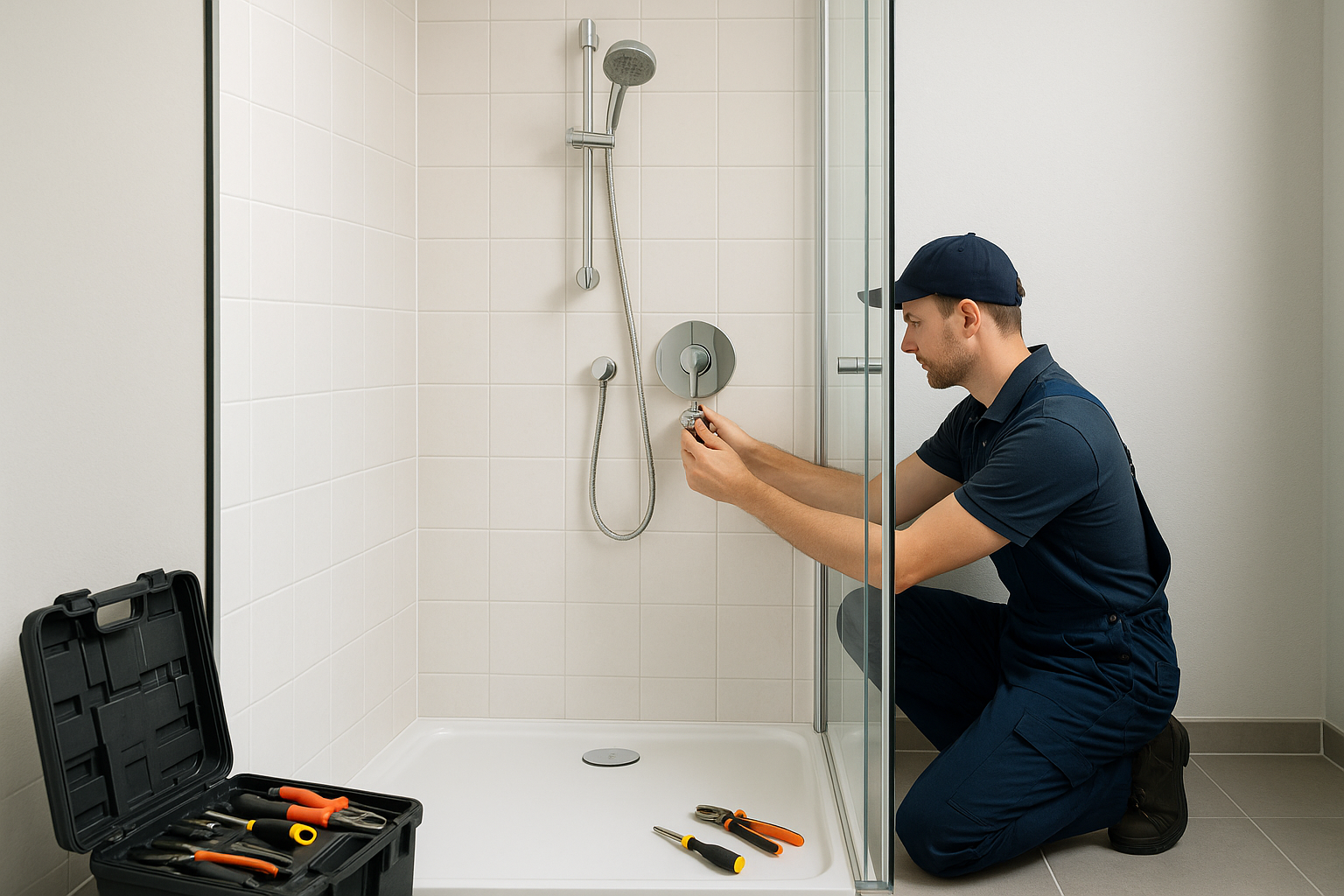
The final stage includes installing glass doors, shower heads, handles, shelving, and other accessories. Caulking and sealing are then completed to help keep water contained. A careful final inspection ensures the shower is functioning properly and looks clean and complete.
Common Mistakes to Avoid
One of the biggest mistakes in shower installation is rushing the waterproofing process. Even a small gap or weak seal can allow moisture to seep into the walls or floor. Another common issue is choosing materials that are not suitable for wet environments.
Homeowners should also avoid ignoring ventilation. A shower creates constant humidity, so a strong exhaust fan is important to reduce condensation and protect the bathroom from mold and mildew. Finally, incorrect measurements can cause major delays, so it is best to double-check dimensions before purchasing materials.
Should You DIY or Hire a Professional?
Some homeowners feel comfortable handling a basic prefabricated shower installation, especially if they have experience with plumbing or home improvement projects. However, more complex jobs typically require professional expertise. Custom tile work, waterproofing, drainage adjustments, and plumbing modifications are best handled by an experienced installer.
Hiring a professional can save time and reduce the risk of costly mistakes. It also provides peace of mind knowing the shower has been installed according to code and built to last. If your project involves structural changes or major plumbing work, professional installation is usually the safer choice.
Choosing the Right Materials
Material selection affects both appearance and performance. Acrylic and fiberglass are common choices for prefabricated showers because they are lightweight and easy to maintain. Tile, stone, and solid-surface materials offer a more customized look but may require more maintenance and higher upfront costs.
It is also important to choose durable fixtures and moisture-resistant accessories. Quality shower valves, handles, and doors can improve daily use and help the shower stay attractive over time.
Maintaining Your New Shower
Once installation is complete, regular maintenance will help extend the life of your shower. Clean the surfaces frequently to prevent soap scum and mineral buildup. Check caulking and grout lines periodically for wear, and address small problems before they turn into larger repairs.
Proper ventilation is also essential. Running the exhaust fan during and after showers helps reduce humidity and protect the shower enclosure, walls, and ceiling from excess moisture.
Conclusion
Shower installation is an investment that can improve both the comfort and value of your home. By choosing the right shower style, planning carefully, and focusing on proper waterproofing and drainage, you can enjoy a beautiful and reliable bathroom upgrade for years to come.