What Is a Tankless Water Heater?
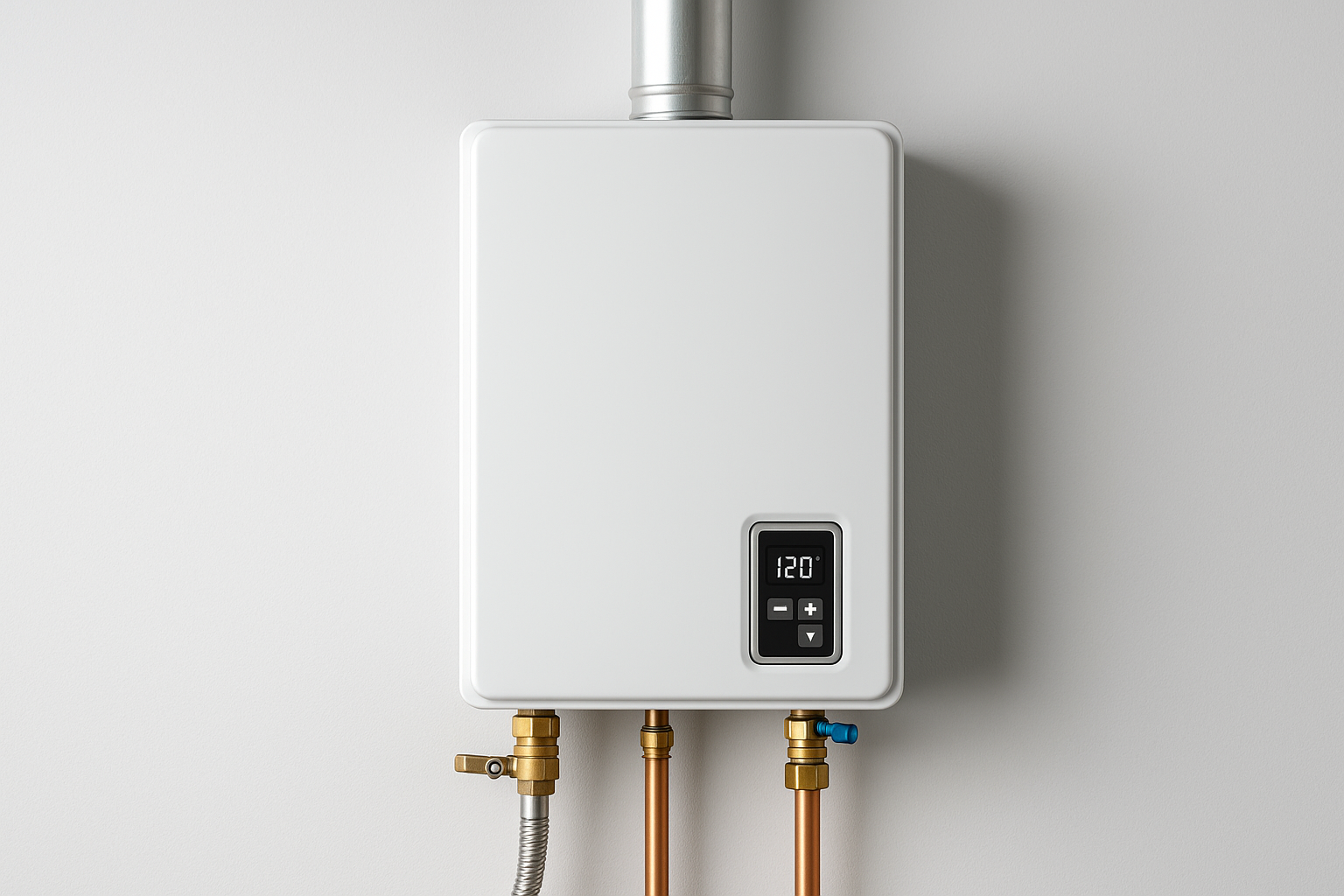
A tankless water heater is a system that heats water only when you need it, instead of storing hot water in a large tank. When you turn on a faucet, shower, or appliance, cold water passes through the unit and is heated quickly by either gas burners or electric elements. This on-demand design is what makes tankless systems so appealing to many homeowners.
Unlike traditional storage water heaters, tankless models are built to deliver hot water without keeping dozens of gallons heated around the clock. That can mean less standby energy loss, a smaller footprint, and a more modern approach to home comfort.
How Does a Tankless Water Heater Work?
The basic process is simple. When a hot water tap opens, a flow sensor activates the unit. The system then heats the incoming cold water as it moves through a heat exchanger. Because the water is heated instantly, you do not need to wait for a tank to refill and reheat.
Most tankless units are either gas-powered or electric. Gas models often provide a higher flow rate, which can make them a strong choice for larger households. Electric models are typically smaller and easier to install, though they may require significant electrical capacity depending on your home’s demand.
Benefits of a Tankless Water Heater
1. Endless Hot Water
One of the biggest advantages is the ability to produce hot water continuously, as long as the system is sized properly for your household. This is especially useful for families with back-to-back showers, laundry, and dishwashing needs.
2. Energy Efficiency
Traditional water heaters keep a large tank of water hot all day, even when you are not using it. A tankless water heater avoids much of that standby heat loss by warming water only when needed. Over time, that can help reduce energy use and lower utility bills.
3. Space Savings
Tankless systems are compact and can often be mounted on a wall. That frees up valuable floor space in a utility room, basement, garage, or closet. For smaller homes, this benefit can be especially important.
4. Longer Lifespan
With proper maintenance, many tankless water heaters last longer than conventional tank-style units. While a traditional water heater may need replacement after 8 to 12 years, a tankless system can often perform well for 15 to 20 years or more.
5. Reduced Risk of Tank Leaks
Because there is no large storage tank holding gallons of water, there is less risk of catastrophic tank failure or major flooding caused by a ruptured tank. This can provide extra peace of mind for homeowners.
Potential Drawbacks to Consider
Although tankless water heaters offer many benefits, they are not perfect for every home. The upfront cost is usually higher than a traditional water heater, and installation can be more involved. In some cases, upgrades to gas lines, venting, or electrical service may be required.
Another consideration is flow rate. A single unit may struggle to supply multiple high-demand fixtures at the same time if it is not sized correctly. In colder climates, incoming water is colder, which can also affect performance and output.
Finally, tankless systems need regular maintenance to stay efficient. Hard water can cause scale buildup inside the heat exchanger, so descaling and routine inspections are important.
Is a Tankless Water Heater Right for You?
A tankless water heater may be a great fit if you want energy savings, long-term durability, and a steady supply of hot water. It is especially attractive for households that value efficiency or need to reclaim space.
However, it may not be the best choice if your home has very high simultaneous hot water demand, limited installation space for venting or electrical upgrades, or a tight initial budget. The right system depends on your household size, water usage habits, climate, and utility setup.
Tips for Choosing the Right Tankless Water Heater
Start by estimating your peak hot water needs. Think about how many showers, faucets, and appliances may run at the same time. This helps determine the right flow rate and capacity.
Next, decide whether gas or electric makes more sense for your home. Gas units often support higher demand, while electric units may be simpler in smaller homes or apartments with the right electrical capacity.
You should also look at efficiency ratings, warranty coverage, and maintenance requirements. A professional installer can help you account for venting, fuel supply, and local code requirements so the system performs safely and effectively.
Maintenance Basics
To keep your tankless water heater running well, schedule regular maintenance. Flushing the unit to remove mineral buildup is one of the most important steps, especially in areas with hard water. You should also clean inlet filters, check for leaks, and inspect venting or electrical connections as needed.
Routine care can help preserve efficiency, reduce repair costs, and extend the life of the unit. Even though tankless heaters are known for convenience, they still need attention to work their best.
Conclusion
A tankless water heater can be an excellent upgrade for homeowners who want efficient, space-saving, and reliable hot water. While the initial investment may be higher, the long-term benefits often make it worthwhile. By understanding how it works, what it offers, and what it requires, you can decide whether this modern system is the right choice for your home.