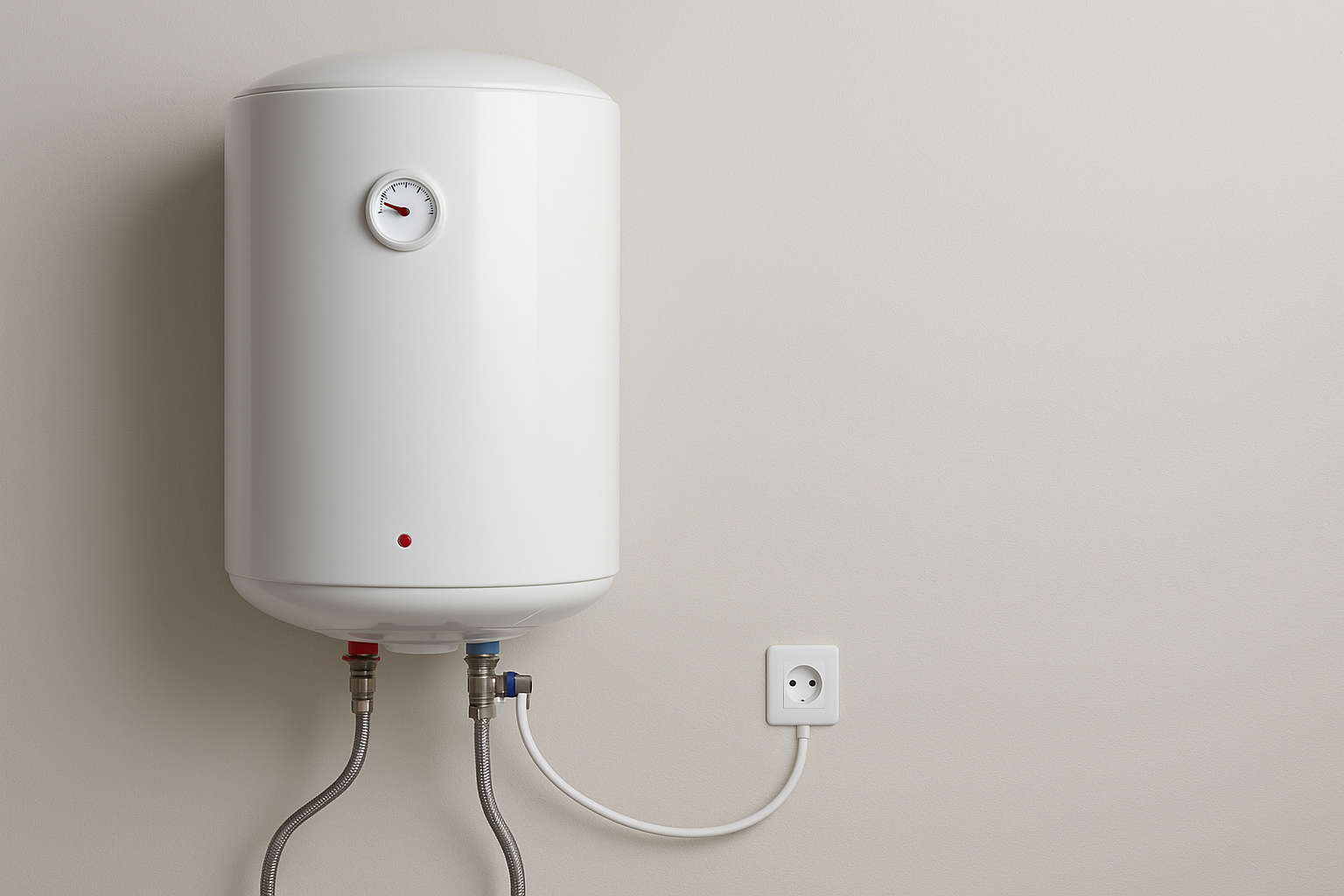
What Is a Tank Water Heater?
A tank water heater is the traditional system most homeowners think of when they picture hot water at home. It stores a fixed amount of heated water in an insulated tank, usually ranging from 30 to 80 gallons, so hot water is ready when you turn on a faucet, shower, or appliance. These units are popular because they are familiar, relatively affordable, and available in both gas and electric models.
The basic idea is simple: the tank keeps water hot all day, then refills and reheats as water is used. This makes tank water heaters a dependable choice for many households, especially those that want a straightforward system with predictable performance.
How Does a Tank Water Heater Work?
A tank water heater operates by continuously maintaining a supply of hot water inside a storage tank. Cold water enters the tank through a dip tube, and a heat source warms the water until it reaches the set temperature. In gas models, a burner located at the bottom of the tank heats the water. In electric models, heating elements inside the tank do the job.
As hot water is drawn from the top of the tank, cold water replaces it at the bottom. The unit then reheats the incoming water to keep the tank full of usable hot water. Most systems include a thermostat, a pressure relief valve, and insulation to improve safety and efficiency.
This storage-and-reheat process is what makes tank water heaters so reliable. However, because the system stores a limited amount of hot water, households can run out during periods of heavy demand if the tank is undersized or if multiple appliances are used at once.
Types of Tank Water Heaters
Gas Tank Water Heaters
Gas tank water heaters use natural gas or propane to heat water. They are often appreciated for their faster recovery rate, which means they can reheat water more quickly after it has been used. This can be helpful in larger homes or households with higher hot water demand.
Electric Tank Water Heaters
Electric tank water heaters use electrical heating elements and are typically easier to install where gas service is not available. They are often considered a good option for smaller homes, apartments, or areas where electricity costs are reasonable.
Hybrid Tank Water Heaters
Hybrid models combine a traditional tank with heat pump technology. They use less energy than standard electric units by pulling heat from the surrounding air. While they usually cost more upfront, they can offer long-term savings in the right setting.
Benefits of a Tank Water Heater
Tank water heaters remain a common choice for a reason. One major advantage is their lower upfront cost compared with many tankless systems. They are also widely available, which makes replacement and installation easier in many homes.
Another benefit is simplicity. Tank water heaters have a straightforward design that is familiar to most plumbers and homeowners. That often means easier maintenance, easier repairs, and fewer surprises when service is needed.
They also provide immediate access to hot water stored in the tank. For many families, this is a practical and comfortable solution that works well for everyday routines like showers, laundry, and dishwashing.
Common Drawbacks to Consider
Despite their advantages, tank water heaters are not perfect. The biggest limitation is that they can run out of hot water if demand exceeds storage capacity. A long shower followed by back-to-back laundry and dishwashing may leave the tank empty until it reheats.
They also take up more space than many tankless systems because the storage tank itself requires a dedicated installation area. In addition, standard tank models can lose some heat over time, which may increase energy use as the unit works to maintain the water temperature.
Another factor to keep in mind is lifespan. Most tank water heaters last about 8 to 12 years, depending on water quality, maintenance, and usage. Eventually, sediment buildup and corrosion can reduce efficiency and lead to failure.
How to Choose the Right Tank Water Heater
1. Determine the Right Size
Choosing the right size is one of the most important steps. A tank that is too small will leave you without enough hot water, while one that is too large may waste energy. Household size, daily habits, and peak usage times all matter.
For example, a smaller household may be fine with a 30- to 40-gallon tank, while a family of four or more may need 50 gallons or more. If multiple showers, laundry, and dishwasher use happen around the same time, a larger tank or faster recovery rate may be necessary.
2. Choose Fuel Type
Gas and electric models each have strengths. Gas units often recover faster and may cost less to operate in areas with affordable natural gas. Electric units are commonly easier to install and may be a better fit where gas lines are unavailable.
Your utility access, local energy rates, and installation costs should all be part of the decision.
3. Look at Efficiency Ratings
Energy efficiency matters because it affects your monthly utility bills. Look for the Energy Factor or Uniform Energy Factor rating when comparing models. Higher-efficiency units may cost more initially, but they can lower operating expenses over time.
4. Consider Installation Space
Tank water heaters need enough room for the tank itself, along with proper clearance for ventilation, servicing, and safety. Before buying, measure the available space and make sure the model you choose fits comfortably.
Maintenance Tips for Longer Life
Regular maintenance can help your tank water heater last longer and work more efficiently. One of the most important tasks is flushing the tank once a year to remove sediment that settles at the bottom. Sediment can reduce heating performance and cause noise or damage over time.
It is also wise to check the anode rod periodically. This component helps prevent corrosion inside the tank and may need to be replaced every few years. In addition, test the pressure relief valve and inspect the tank for leaks, rust, or signs of wear.
If you notice inconsistent water temperature, unusual noises, or rusty water, it may be time to have the system inspected by a professional.
Tank Water Heater vs. Tankless Water Heater
Many homeowners compare tank water heaters with tankless systems. The biggest difference is storage. A tank water heater keeps hot water ready in advance, while a tankless water heater heats water only when needed.
Tank models usually cost less upfront and are often simpler to replace. Tankless systems tend to save space and may offer better energy efficiency, but they often come with a higher installation cost. The right choice depends on your budget, household demand, and how much value you place on convenience versus long-term efficiency.
Conclusion
A tank water heater is a dependable, practical option for many homes. It offers familiar operation, easy maintenance, and a lower upfront cost than many alternatives. By understanding how it works, what sizes and fuel types are available, and how to maintain it properly, you can choose a system that meets your household’s hot water needs with confidence.