Introduction
Exterior water connections are the fixtures and plumbing points that provide access to water outside your home. From garden hoses and irrigation systems to outdoor kitchens and pressure washers, these connections make daily tasks easier and help keep your property functional and attractive. When they are installed correctly and maintained well, exterior water connections can save time, reduce water waste, and protect your home from plumbing problems.
Whether you are adding a new hose bib, upgrading an outdoor faucet, or planning a more complex irrigation setup, it helps to understand how exterior water connections work. In this guide, we will cover the main types, key installation considerations, maintenance tips, and common problems to watch for.
What Are Exterior Water Connections?
Exterior water connections are plumbing access points located on the outside of a building. They connect to the home’s interior water supply and provide a convenient way to use water outdoors. Most homeowners are familiar with hose bibs, but exterior water connections can include many other components as well.
These connections are often used for:
- Watering lawns, gardens, and landscaping
- Washing cars, patios, and driveways
- Supplying water to outdoor kitchens or utility areas
- Filling pools, hot tubs, or decorative water features
- Supporting irrigation and sprinkler systems
Because they are exposed to weather, exterior water connections must be built to handle temperature changes, moisture, and regular use.
Common Types of Exterior Water Connections
Hose Bibs and Outdoor Faucets
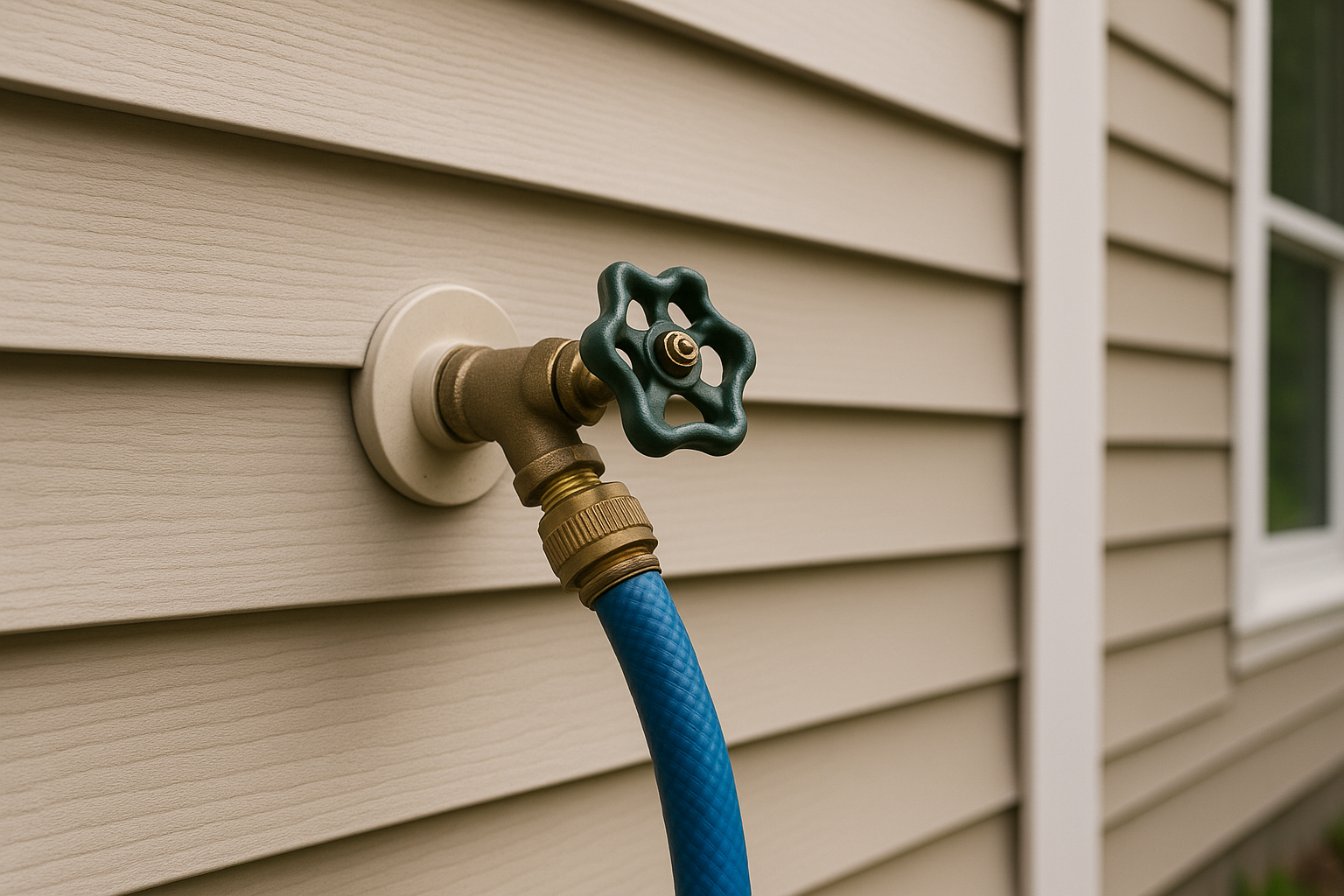
Hose bibs are the most common type of exterior water connection. They are simple outdoor faucets that allow you to attach a garden hose. Many modern hose bibs are frost-free, which means the shutoff valve is located deeper inside the wall to help prevent freezing in cold weather.
Utility Sinks and Laundry Connections
Some homes include exterior utility sinks or connections for outdoor cleaning tasks. These are useful in garages, workshops, and side yards where access to water is helpful for rinsing tools or handling messy projects.
Irrigation and Sprinkler Connections
Irrigation systems rely on dedicated water lines that deliver water to sprinklers, drip lines, and other watering devices. These connections often include backflow prevention devices to protect the home’s drinking water supply.
Outdoor Kitchen and Entertainment Area Connections
Outdoor kitchens, bars, and entertainment spaces may include water lines for sinks, ice makers, or cleaning stations. These setups require careful planning to ensure the pipes are properly protected and easy to service.
Why Proper Installation Matters
Exterior water connections may look straightforward, but proper installation is essential. A poorly installed connection can lead to leaks, water damage, mold growth, and even frozen pipes in colder climates. It can also increase water bills and create long-term maintenance issues.
Several factors make installation important:
- Weather protection: Pipes must be insulated or placed correctly to prevent freezing.
- Leak prevention: Secure fittings and quality materials reduce the risk of hidden leaks.
- Water pressure control: Proper setup helps avoid bursts, drips, and appliance damage.
- Code compliance: Many plumbing systems must meet local building codes, especially for backflow prevention and shutoff valves.
If a connection is going to be used frequently or support a larger system, it is worth making sure the design and installation are done right the first time.
Maintenance Tips for Exterior Water Connections
Inspect for Leaks Regularly
Check outdoor faucets, hose fittings, and exposed pipes for drips, corrosion, or wet spots. Even a slow leak can waste a surprising amount of water over time. If you notice moisture around the wall where a connection enters your home, address it quickly.
Disconnect Hoses Before Winter
One of the most important seasonal maintenance steps is removing hoses before freezing temperatures arrive. A hose left attached can trap water in the line and increase the chance of a frozen or burst pipe. If you have frost-free hose bibs, this step is still essential.
Turn Off and Drain Seasonal Lines
If your exterior water connections are only used during certain times of the year, shut them off and drain the lines before winter. This helps protect pipes from expansion caused by freezing water.
Clean and Replace Worn Parts
Wash away dirt and mineral buildup around faucets and connectors. Replace cracked washers, worn hoses, and damaged fittings as needed. Small repairs can prevent larger plumbing problems later.
Signs of Trouble
Exterior water connections usually give warning signs before they fail completely. Look for these common issues:
- Water dripping from the faucet when it is turned off
- Reduced water pressure
- Rust, mineral deposits, or visible corrosion
- Water stains on exterior walls
- Unexplained increases in your water bill
- Frost damage or cracks after winter
If you notice any of these problems, it is best to schedule a repair sooner rather than later. Catching issues early can help you avoid interior water damage and more expensive plumbing work.
When to Upgrade Exterior Water Connections
It may be time to upgrade your exterior water connections if they are old, difficult to use, or no longer meeting your needs. Homeowners often replace outdated hose bibs with frost-free models, add extra outdoor faucets for convenience, or install dedicated lines for irrigation and outdoor living spaces.
Upgrades are especially useful when:
- You are renovating your yard or adding landscaping features
- You need better access to water on multiple sides of the home
- Your current fixtures leak or corrode often
- You want to improve winter protection
- You are installing an outdoor kitchen or irrigation system
Choosing the right materials and placement can make outdoor water use safer and more convenient for years to come.
Conclusion
Exterior water connections are a small part of your home, but they play a big role in comfort, convenience, and property maintenance. With the right installation, routine upkeep, and timely repairs, they can provide reliable service through every season. Whether you are maintaining an existing hose bib or planning a larger outdoor plumbing project, understanding your exterior water connections is the first step toward protecting your home and getting the most from your outdoor space.