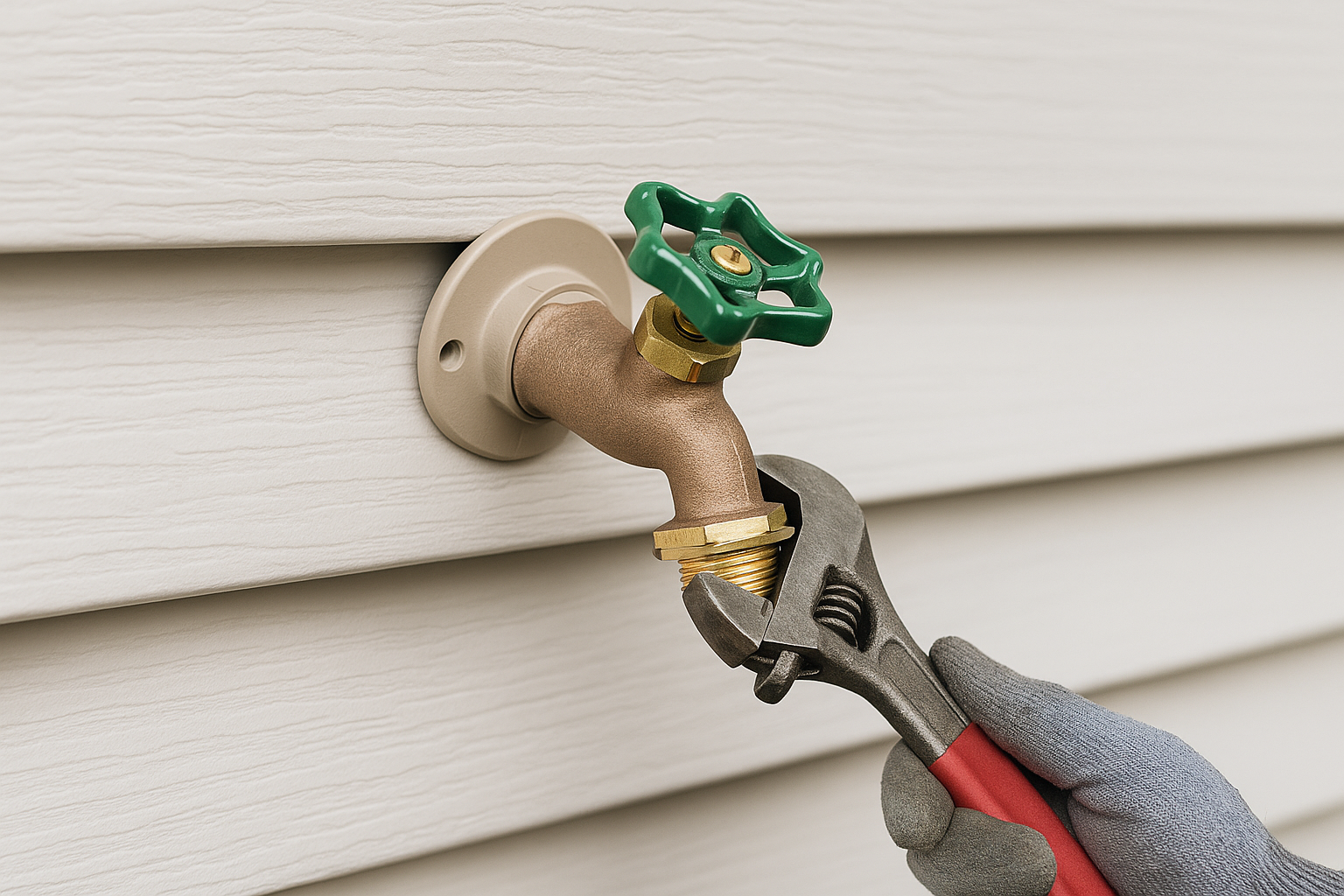
What Is a Hose Bib?
A hose bib is the outdoor water faucet attached to the exterior of your home. It’s where you connect a garden hose for watering plants, washing the car, filling buckets, and handling other outdoor tasks. You may also hear it called an outdoor spigot, sillcock, or hose valve.
Because it sits outside, a hose bib is exposed to weather, frequent use, and seasonal temperature changes. Over time, that wear and tear can lead to leaks, reduced water pressure, or complete failure. When that happens, hose bib replacement becomes the best solution.
Signs You Need Hose Bib Replacement
Some hose bib problems can be fixed with a washer, packing nut adjustment, or minor repair. But in many cases, replacement is the smarter long-term choice. Look for these common warning signs:
- Constant dripping: Water leaks even when the valve is fully closed.
- Visible corrosion: Rust, mineral buildup, or green discoloration around the fixture.
- Cracked body: Freeze damage can split the pipe or valve.
- Weak water flow: Sediment or internal damage may restrict water output.
- Handle problems: The handle is loose, stripped, or hard to turn.
- Leaks inside the wall: Water stains or dampness inside the home near the hose bib.
If you notice any of these issues, it’s best to address them quickly. Even a small leak can waste water and lead to damage behind the walls or on your home’s exterior.
Why Hose Bibs Fail
Hose bibs can fail for several reasons. One of the most common is freezing weather. When water remains inside the pipe and temperatures drop, the expanding ice can crack the hose bib or connected plumbing. This is especially common if the faucet is not frost-proof or if the water supply isn’t properly shut off in winter.
Other causes include normal wear from repeated use, age, mineral buildup from hard water, and corrosion from constant exposure to moisture. In some homes, the original hose bib may simply be outdated or installed with materials that no longer perform well.
Can You Repair or Should You Replace?
Deciding between repair and replacement depends on the condition of the fixture. A simple leak from the handle or packing nut may be fixed without replacing the entire hose bib. However, if the valve body is cracked, the internal parts are worn out, or the leak is coming from inside the wall, replacement is usually the safer and more reliable choice.
In general, replacement makes sense when:
- The hose bib is older and has recurring issues.
- There is freeze damage or visible cracking.
- The fixture leaks after basic repairs.
- You want to upgrade to a frost-proof model.
Replacing the hose bib can save time, reduce future maintenance, and improve protection against water damage.
Types of Hose Bibs
Not all hose bibs are the same. Choosing the right replacement depends on your climate, plumbing setup, and home design.
Standard Hose Bibs
These are common outdoor faucets that extend directly through the wall. They work well in mild climates but may be vulnerable to freezing if not properly winterized.
Frost-Free Hose Bibs
Also called frost-proof sillcocks, these are designed so the shutoff valve sits farther inside the wall, where temperatures are warmer. They are a smart option in colder regions because they reduce the risk of freeze-related damage.
Anti-Siphon Hose Bibs
These include a built-in vacuum breaker that helps prevent contaminated water from flowing back into your home’s water supply. They are often required by plumbing codes and add an extra layer of safety.
What Happens During Hose Bib Replacement?
Hose bib replacement typically starts with shutting off the water supply to the outdoor faucet or to the affected section of plumbing. The old fixture is then removed, and the plumbing connection is inspected for damage. If necessary, the opening may need to be repaired before the new hose bib is installed.
The new fixture is connected, sealed properly, and tested for leaks. If the replacement involves a frost-free model, correct installation depth is important so the shutoff valve is placed in the protected part of the wall. A professional plumber will also check for water pressure issues and ensure the new hose bib works smoothly.
Why Professional Installation Matters
Hose bib replacement may look simple, but it can involve more than just swapping one faucet for another. If the pipe behind the wall is damaged, if the fixture is soldered in place, or if the wall opening needs adjustment, the job becomes more complex.
A professional plumber can help ensure the replacement is installed correctly and sealed against leaks. This matters because even a small mistake can lead to water intrusion, mold, or structural damage over time. A properly installed hose bib should operate easily, shut off completely, and hold up through seasonal changes.
How to Prevent Future Problems
Once your new hose bib is installed, a few simple habits can help extend its life:
- Disconnect hoses before freezing weather arrives.
- Shut off and drain exterior lines if your plumbing system allows it.
- Check the fixture periodically for drips or corrosion.
- Use the handle gently rather than forcing it.
- Consider upgrading to a frost-free or anti-siphon model if you don’t already have one.
Routine care can prevent many of the issues that lead to early failure and reduce the chance of costly repairs later.
Conclusion
Hose bib replacement is a practical home improvement that can protect your plumbing, conserve water, and make outdoor tasks easier. If your outdoor faucet is leaking, damaged, or outdated, replacing it sooner rather than later can help prevent bigger problems. Whether you choose a standard, frost-free, or anti-siphon model, a properly installed hose bib is a small upgrade that delivers real peace of mind.