
What Is Inbound Content Marketing?
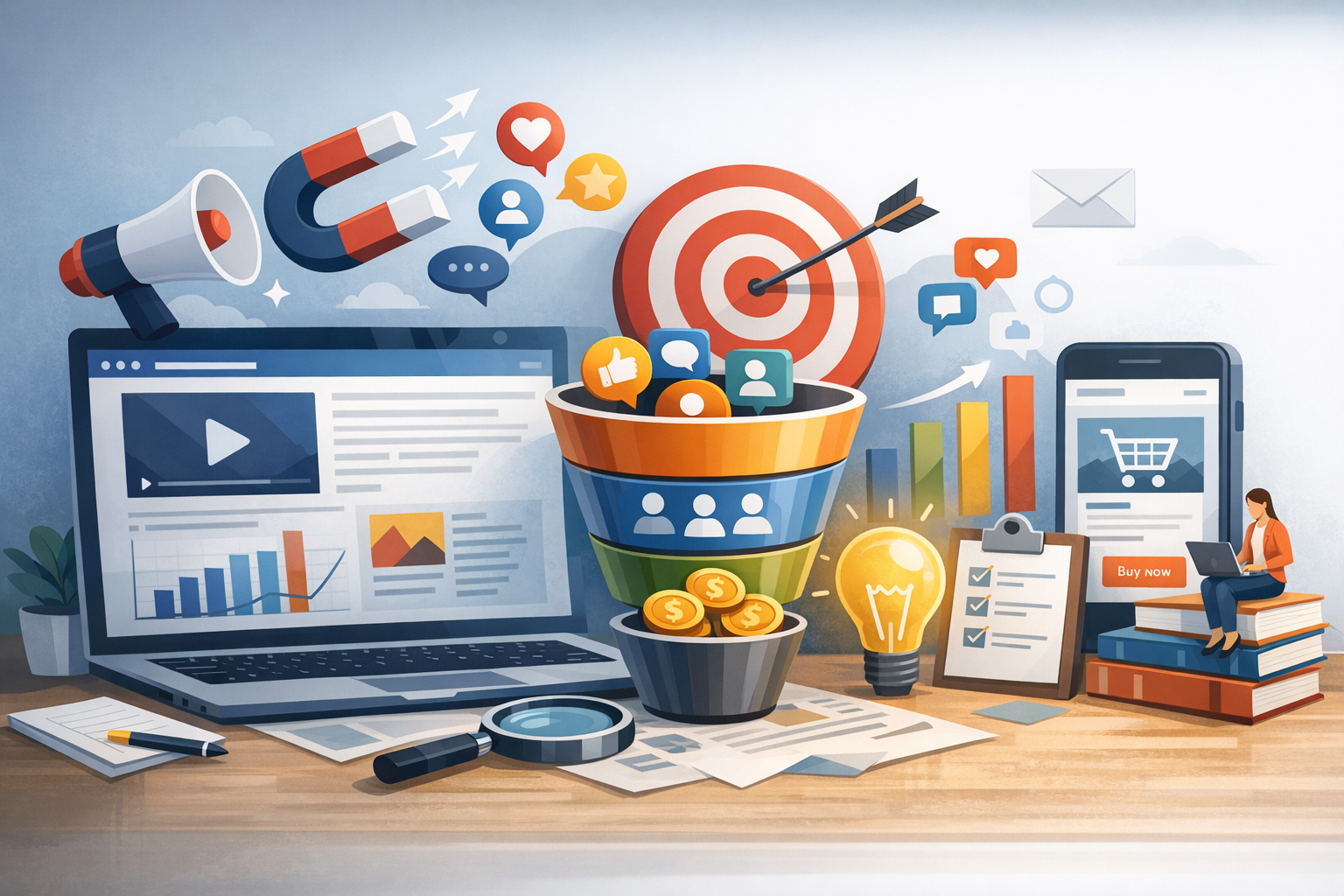
Inbound content marketing is a strategy focused on attracting people to your business by creating and distributing content that helps them solve problems, learn something new, or make better decisions. Instead of interrupting audiences with ads they didn’t ask for, inbound meets potential customers where they already are—search engines, social platforms, communities, and inboxes—and guides them toward your brand through genuinely useful information.
At its core, inbound content marketing combines two ideas:
- Inbound marketing: earning attention by being relevant and helpful at each stage of the buyer journey.
- Content marketing: using assets like blog posts, guides, videos, webinars, and emails to educate and build trust.
Done well, inbound content marketing creates a predictable system that turns strangers into visitors, visitors into leads, and leads into customers—while also improving retention through ongoing value.
Why Inbound Content Marketing Works
Inbound content marketing works because it aligns with how people actually buy today. Most customers research independently before talking to sales. They compare options, read reviews, watch demos, and ask peers for recommendations. Helpful content reduces uncertainty, builds credibility, and positions your brand as the obvious choice.
Key reasons inbound is so effective include:
- Trust compounds: helpful content builds authority over time and makes future decisions easier.
- Search visibility: content that answers real questions can rank for months or years and bring consistent traffic.
- Better lead quality: people who engage with educational content often have clearer intent and convert at higher rates.
- Lower long-term costs: unlike paid campaigns that stop when budget stops, evergreen content continues generating returns.
The Inbound Content Marketing Framework
A practical inbound content marketing framework typically maps content to the customer journey. While exact terminology varies, most strategies follow a similar arc: Attract → Engage → Convert → Delight. Your goal is to deliver the right content to the right person at the right time, using the right channel.
Attract: Reach the Right Audience
At the attract stage, you’re building awareness and driving qualified traffic. Your content should focus on the questions, pain points, and goals your ideal customers already have—not on product features. Think of this as the “help first” phase.
Common attract-stage content formats include:
- SEO-driven blog posts targeting informational keywords (e.g., “how to choose a CRM,” “best project management methods”).
- Short-form social content that introduces concepts, frameworks, and quick tips.
- Videos that explain problems and common solutions.
- Podcasts or guest appearances that borrow credibility from established audiences.
Best practice: build topic clusters around your core offerings. Instead of writing isolated posts, create a structured set of related pages—one comprehensive pillar page plus supporting articles that interlink. This strengthens SEO and improves user experience.
Engage: Build Trust and Keep Them Coming Back
Once you’ve attracted visitors, inbound content marketing shifts to engagement: helping people evaluate options, understand trade-offs, and see your approach as credible. This is where your content becomes more specific to your category, your methodology, and the outcomes you deliver.
Effective engage-stage content might include:
- In-depth guides that go beyond basics and outline clear next steps.
- Email newsletters that consistently deliver insights and curated resources.
- Webinars and workshops that teach a process and invite questions.
- Case studies that show real results and the context behind them.
- Comparison pages (e.g., “Option A vs. Option B”) that address common evaluation questions honestly.
Best practice: design engagement content around objections. What typically stalls a deal—budget, implementation time, risk, complexity, stakeholder buy-in? Create assets that directly address those concerns with examples and proof.
Convert: Turn Attention Into Leads and Customers
Conversion is where inbound content marketing connects directly to revenue. At this stage, your audience is looking for specifics: how your solution works, why it’s different, what it costs, and what happens after they sign up.
High-performing convert-stage assets include:
- Lead magnets such as templates, checklists, calculators, and industry reports.
- Product demos (live or recorded) that show outcomes, not just features.
- Free trials or assessments that reduce risk and provide immediate value.
- Pricing and packaging pages that clearly explain what’s included and who each plan is for.
- Landing pages optimized for a single action with a clear value proposition.
Best practice: match the CTA to intent. Someone reading a beginner-level article may respond to a checklist, while someone reading a comparison page may be ready for a demo. Avoid pushing bottom-of-funnel CTAs on top-of-funnel visitors.
Delight: Keep Customers and Create Advocates
Inbound doesn’t stop at the sale. Delight content reduces churn, improves product adoption, and turns customers into promoters who refer others. This stage is often overlooked, yet it can drive some of the highest ROI because retention and referrals are powerful growth levers.
Delight-stage content may include:
- Onboarding sequences that help new customers reach their first win quickly.
- Knowledge bases and tutorials that reduce support friction.
- Customer communities where users share best practices and ask questions.
- Advanced training for power users who want to get more value.
- Customer spotlights that celebrate success and build social proof.
Best practice: create content aligned to “time-to-value.” Identify the moments that predict retention (e.g., setup complete, first report built, first campaign launched) and build content that gets customers there faster.
How to Build an Inbound Content Marketing Strategy
Inbound content marketing works best when you treat it as a system—one with clear goals, processes, and feedback loops. Here’s a practical approach for building your strategy from the ground up.
1) Define Your Ideal Customer and Journey
Start with clarity. Document who you’re trying to reach, what they care about, and how they make decisions. Useful tools include:
- ICP (Ideal Customer Profile): industry, company size, budget, maturity, and common constraints.
- Personas: goals, fears, success metrics, and internal pressures.
- Journey map: awareness questions, consideration criteria, and decision triggers.
This becomes the foundation for every topic, headline, and CTA you publish.
2) Choose Topics That Align With Business Outcomes
Not all traffic is valuable. Prioritize topics that connect to what you sell and the problems you solve. A simple way to do this is to categorize content into:
- Pain-point content: problems your product/service addresses.
- Use-case content: real scenarios where your solution fits.
- Category education: how your market works and what “good” looks like.
- Decision support: comparisons, implementation guides, and ROI considerations.
Then validate topics using keyword research, sales call insights, customer interviews, and support tickets.
3) Create a Content Plan and Publishing Rhythm
Consistency matters more than intensity. Build a realistic plan you can sustain. A solid starting point might be:
- 1–2 SEO articles per week (or 4–6 per month)
- 1 lead magnet per quarter
- 2–4 emails per month
- Weekly social distribution of key insights from published content
Use an editorial calendar that includes the target keyword, funnel stage, primary CTA, distribution channels, and repurposing opportunities.
4) Optimize for Search and User Experience
Inbound content marketing depends heavily on discoverability. Basic SEO and on-page experience go a long way:
- Search intent match: ensure the content format and depth match what users expect.
- Clear structure: scannable headings, short paragraphs, and helpful visuals.
- Internal linking: guide readers to related posts, tools, and conversion pages.
- Fast pages: optimize performance for mobile and Core Web Vitals.
Remember: rankings are useful, but conversions come from clarity. Make it easy for readers to understand what to do next.
5) Distribute and Repurpose Content
Publishing is only half the job. Strong inbound programs treat distribution as a repeatable workflow. After each “core” asset (like a blog post or webinar), repurpose it into multiple smaller pieces:
- Turn key sections into LinkedIn posts or X threads
- Extract statistics and add them to an email newsletter
- Create short videos answering one specific question
- Build a slide deck for sales enablement
This approach increases reach without multiplying effort.
Key Metrics to Track (and What They Tell You)
Inbound content marketing performance should be measured across the funnel. Focus on metrics that connect activity to outcomes:
- Organic traffic: signals discoverability and SEO traction over time.
- Engagement: time on page, scroll depth, returning visitors, and email open/click rates show content resonance.
- Lead metrics: form conversion rate, cost per lead (blended), and lead quality indicate whether CTAs match intent.
- Pipeline impact: influenced opportunities, conversion rates by content touchpoints, and sales cycle length.
- Customer outcomes: activation rates, retention, expansion, and referrals for post-purchase content.
Tip: build a simple monthly reporting dashboard with 5–8 core metrics. Track trends over time rather than obsessing over weekly swings.
Common Inbound Content Marketing Mistakes to Avoid
Inbound content marketing is powerful, but it’s easy to waste effort if the fundamentals aren’t in place. Watch out for these common pitfalls:
- Publishing without a strategy: random topics and inconsistent posting make results slow and unpredictable.
- Writing for everyone: vague content attracts unqualified traffic and weak conversions.
- Ignoring distribution: great content can’t perform if nobody sees it.
- Over-gating too early: forcing email capture on top-of-funnel content can reduce trust and engagement.
- No content-to-offer connection: content that never bridges to your solution won’t generate pipeline.
Conclusion
Inbound content marketing is a long-term growth engine built on trust, relevance, and consistency. By aligning content to the customer journey—attracting the right audience, engaging them with real value, converting with the right offers, and delighting customers after the sale—you can create a system that drives qualified traffic, stronger leads, and sustainable revenue. Start small, measure what matters, and keep improving—your best inbound results will compound over time.